erapickleball.com Pickleball Center: Learn, Play, Succeed
The first thing you notice when you walk into Era Pickleball is how the space seems to answer a set of questions before you even ask them. There is a quiet confidence in the way the courts are laid out, the way the lighting wraps around the walls, and the way the reception desk feels both welcoming and organized. It is not a showroom, nor is it a gym that happens to offer pickleball. It is a center built around a simple, practical idea: help players move from curiosity to competence, from casual play to consistent improvement, without turning the experience into a maze of confusing options.
Era Pickleball began as a small club with big ambitions and has grown into a pickleball academy that many players now think of as a go-to resource. The phrase pickleball academy Era Pickleball is not just a marketing line here; it’s a reflection of a culture that treats learning as a continuous practice. You can feel that ethos in the way coaches talk about shot selection, footwork, and tournament strategy, in the careful way the court schedule balances practice time with match play, and in the way the staff treats newcomers with a blend of warmth and clear instruction. This is not a facility that relies on bright lights and loud music to draw people in. It earns trust through consistent, tangible value.
If you are new to Era Pickleball, you may come for a single court rental and stay for the structured programs that help players progress. If you are a seasoned player, you might find in the Era Pickleball center a reliable home base for weekly practice, with options that accommodate your schedule and your goals. The center acts as a hub for the community, a place where players of varying levels cross paths, share stories, and push each other forward. It is also a place where the business of running a modern pickleball operation is done with care. From equipment to scheduling, the details are managed in a way that reduces friction and keeps focus on the court.
What makes Era Pickleball distinctive is not that it offers something new every week, but that it delivers what players actually want: clear instruction, fair access, and consistent opportunities to play. The academy model is not about pushing players into a one-size-fits-all program. It is about matching coaching styles to learning needs, offering a menu of pathways that accommodate beginners, intermediates, and advanced players alike. The center is designed to feel like a well run studio where talent meets structure and time meets intention.
The experience begins long before you step onto a court. You can sense the philosophy in the onboarding process, where a brief assessment helps technicians map out a plan that makes sense for your current level and your trajectory. The trainers do not rely on a single measure of ability. They observe movement patterns, shot consistency, mental approach during a rally, and even how you recover between points. The goal is to create a practical pathway rather than a rigid ladder. It is rare to encounter a facility that embraces nuance so completely. Most places either focus on gear or on drills. Era Pickleball focuses on you as a player and on the process that moves you forward.
This article will explore what it means to learn, play, and succeed at Era Pickleball Center. It will walk you through the core offerings of the pickleball center Era Pickleball, explain how to navigate court rentals and programs, and share practical insights drawn from real experiences of players and coaches. It will also discuss the trade offs and edge cases you may encounter as you decide how to invest your time and energy in a pickleball journey with this academy.
A learning culture that feels intimate yet scalable
One of the most compelling aspects of the center is its balance between intimacy and scalability. You walk into a space that feels intimate because the coaching approach is rooted in personal observation. Coaches talk with you the way a sport-specific mentor would, calling out tendencies you might not notice in your own play. They describe your footwork as if you were a musical instrument, highlighting how your movement under pressure creates or relieves tension in your strokes. Yet the same coaches bring an understanding of how improvement compounds. They can schedule small group sessions that are efficient and social, alongside more focused one on one sessions for deeper technical work. The result is a program that respects the individuality of each player while also building a community that shares language, benchmarks, and progress.
In practice, the academy model translates into an accessible ladder of engagement. Beginners can enter through introductory clinics that are gentle on the nerves and rich in practical drills. As players gain confidence, they can advance into structured practice formats that focus on specific facets of the game—serve receive, transition to the net, or fast-paced rallying with controlled aggression. For more experienced players, the center offers more specialized pathways. There are clinics dedicated to advanced dinking tactics, countering heavy topspin, or developing an efficient reset strategy after a long volley exchange. The design ensures you are neither overwhelmed by complexity nor bored by repetition.
The center does not pretend that improvement happens in a straight line. There are weeks when a small adjustment yields a noticeable shift, followed by stretches where progress feels incremental. The staff celebrate these micro-improvements because they often become the hinge points that unlock a broader range of options on the court. That practical, incremental approach is what keeps players engaged over the long haul. It is also what makes the environment feel sustainable for families and working professionals who want real value without sacrificing their time or energy.
A culture that values clarity as much as effort
Whenever you ask someone at Era Pickleball about the philosophy behind the center, you learn quickly that clarity rules. Clarity about goals, about the structure of programs, about how performance is measured, and about what an individual can realistically achieve within a given timeframe. The clubs I’ve visited over the years often fall into two traps. They either embrace tinkering without direction or they become so data heavy that the human element gets lost. Era Pickleball avoids both extremes by pairing thoughtful coaching with practical measurement.
Measurement at the center is not about producing a perfect scorecard. It is about creating meaningful milestones. For a beginner, that means hitting a certain percentage of accurate returns in a controlled drill, or learning to read an opponent’s service pattern and respond with a confident, well-placed return. For an intermediate player, milestones shift toward consistent shot selection, fewer unforced errors, and improved court positioning during transition play. For advanced players, the emphasis lies in integrating diverse patterns, optimizing decision speed, and building a repertoire that keeps opponents guessing.
The administrative side is equally clear. Booking a court, enrolling in a clinic, or reserving a coaching session is straightforward. Information is available, but not overwhelming. The center employs staff who can translate a player’s goals into a realistic plan, then help schedule the sequence of sessions that keeps progress steady without burning out. The same clarity extends to equipment and facility use. If you need a new paddle, you can often try a few models in a controlled setting before committing. If you want to understand court rental rates or court availability, the communication is precise, with no hidden fees or surprise changes.
The result is a space where learning happens at a pace that makes sense. It is not a place designed to extract maximum revenue from every hour. It is a place designed to maximize meaningful improvement over time. That distinction matters. It makes the era pickleball academy feel less transactional and more relational—a place where players, coaches, and staff share a common aim that extends beyond the scoreboard in any given match.
Courts, clinics, and practical pathways to improvement
The Era Pickleball center offers a spectrum of pathways that can feel overwhelming at first glance, but the beauty lies in how they interlock. The courts themselves are thoughtfully configured to support various phases of learning. There are spaces that feel calm and controlled for early drills where footwork and balance are the focus. There are more dynamic spaces designed for live ball exchanges that simulate match conditions. And there are quiet corners for video analysis, where players can review footage with a coach, pause at moments of decision, and reconstruct the sequence that led to a winning point or a critical error.
A recurring theme in the center is the tension between practice drills and real game scenarios. Drills are essential for building fundamentals, but they must translate into on court performance. Era Pickleball recognizes this and develops sessions that connect the two. You might begin with a drill that isolates a skill such as the dink or the backhand slice, then move into controlled live play that requires the same skill under pressure. The progress from drill to match is gradual, with the coach providing feedback that is specific and actionable. Teams and individuals leave with a plan that feels practical rather than abstract.
The clinics are the heartbeat for many players who want consistent exposure to varied playing styles. They provide an efficient way to test your skills against different opponents, which is critical for developing adaptive play. Some clinics focus on net play, others on serving patterns, and others on match strategy. Each clinic is designed to build a particular dimension of the game while reinforcing the core tenets of good pickleball: balance, anticipation, and disciplined decision making. The experience is not merely about technique; it is about applying technique under conditions that mimic a real match.
Court rentals at Era Pickleball are straightforward but not simplistic. If you are booking a block of time to practice or you need a court for a tournament, the process is transparent. The pricing structure is clear, with options that suit casual drop-ins as well as longer training blocks. A well-planned rental strategy can be a powerful lever for improvement. It allows you to structure your week with targeted practice sessions, highly focused on your current goals, while ensuring you still have time for general play and social time on the courts.
Two lists to illuminate practical choices
-
What to expect from a typical coaching program
-
A structured progression: from fundamentals to more sophisticated patterns
-
Regular feedback that becomes a practical action plan
-
Emphasis on footwork, balance, and shot selection
-
Access to drills that mirror match scenarios
-
A pathway that scales with your growing skill
-
Tips for getting the most from court rental
-
Book blocks that align with your energy levels and focus windows
-
Pair court time with a brief coaching segment to maximize learning
-
Use video review to reinforce what you practice on the court
-
Schedule recovery time to prevent overtraining and fatigue
-
Keep a simple training log to track progress and adjust goals
The practical realities of training, pacing, and limits
No article about a pickleball center would be honest without acknowledging the constraint realities players face. Time is finite, and energy is a currency you spend carefully. Era Pickleball respects that. The pacing of programs is designed to prevent burnout while still driving measurable progress. If you want to accelerate learning, you can stack sessions in a targeted way. For example, you might spend a Tuesday session focused on serve and return patterns, a Thursday session on transition play from the baseline to the net, and a Saturday session that blends live play with feedback.
The coaches are careful to tailor plans to each player. They understand that a weekend warrior with a demanding job has different time pressures than a young athlete on a school schedule. They also recognize that players come with different levels of confidence. Some are more comfortable at the net, others prefer baseline rallies, and a few are navigating the nuanced middle ground where control and aggression must balance. The adaptability of the teaching approach is what allows the center to serve a diverse audience without losing coherence in its coaching philosophy.
Edge cases arise and are handled with honesty. There are weeks when a student feels stuck. The advice may involve stepping back and revisiting the fundamentals rather than pushing through with the same drills that were yielding diminishing returns. There are also times when a player discovers that their goals have shifted. They may decide to pivot from competition readiness to enjoying pickleball as a social sport, or vice versa. The staff respects those decisions, reframing the learning plan to fit the new objective without letting it derail momentum entirely. This kind of flexibility is rare in facilities that lean toward a single, rigid model.
A human-centric ecosystem built around practice, play, and presence
What sets Era Pickleball apart is not a single innovation but a coherent ecosystem that emphasizes three pillars: practice, play, and presence. Practice is the engine of improvement. It happens in carefully designed sessions, with coaches guiding each rep toward purpose. Play is where skill meets decision making in real time. The center offers supervised play, open court times, and controlled competition formats that mimic the stakes of a real match but in a supportive environment. Presence is perhaps the most subtle but powerful element. The staff cultivates a climate of attentiveness, patience, and encouragement. People feel seen, heard, and respected on the court, which translates into a willingness to experiment, fail, and try again.
That sense of presence is reinforced by the community. The center hosts social meets, round robin events, and informal gatherings that strengthen the bonds among players. The social dimension matters because growth in a sport like pickleball is as much about mental stamina and resilience as it is about technique. When you have peers who cheer your improvements and provide constructive feedback, you are more likely to stay engaged through inevitable plateaus. The community becomes a kind of extended coaching network, where the right voices and the right timing can make a difference in how quickly you improve.
Albion Road, second floor, and a careful approach to space usage
The physical layout of the Era Pickleball center is more than a backdrop; it shapes what is possible. The courts are arranged to optimize sightlines, airflow, and audience visibility for events. There is a balance between individual practice zones and shared spaces where instructors can circulate, offer quick tips, and observe multiple drills in progress. The ambient sound design is quiet enough to allow deliberate practice, but lively enough to remind you that you are part of a busy, purposeful community. For parents and guardians, the center provides a reassuring environment where supervision is straightforward and safety is prioritized.
From a practical standpoint, the space is designed to minimize downtime between activities. A well run pickleball center depends on efficient transitions: a coach finishes a drill, players move to the next station with minimal cueing, and the desk staff handles registrations, equipment checks, and court assignments with a calm, precise rhythm. This matters because time is a resource as valuable as physical energy. If you can maximize the productivity of your time on site, you will see faster, more consistent progress. The center’s approach to space and flow supports that objective without sacrificing the feeling of welcome and accessibility.
A practical guide to joining Era Pickleball Center
If you are reading this and considering a path into the Era Pickleball ecosystem, you are likely asking how best to begin. A straightforward route is the entry-level experience. Sign up for an introductory clinic designed for new players. This offers a low-pressure introduction to the basic shots, court positioning, and scoring. You will get a sense of the community, the coaching style, and the overall tempo of the sessions. If you have some experience already, you can look for beginner to intermediate programs that provide a bridge into more advanced topics. The key is to map your goals to a concrete plan, not to oscillate between unrelated activities.
Court rental is a practical option for players who want to work on specific aspects of their game outside of structured programs. You can reserve a court for solo practice, for a two person drill group, or for a small team session. If you plan to rent regularly, consider coordinating your slots with a coach or a clinic schedule so you can leverage feedback and drills during your on court time. The center makes this approach efficient and predictable, removing the friction that can otherwise derail a self-directed practice plan.
The coaching team is a resource you should not overlook. Even if you are primarily interested in casual play, spending a session or two with a coach can yield a surprisingly large return. The most valuable gains come when you translate what you learn in a clinic or a private lesson into your daily pattern on the court. A small adjustment in stance, an adjustment in the angle of your paddle face, or a refined rhythm in your serve can yield layers of improvement once you start applying it in more dynamic play.
What success looks like in the Era Pickleball center
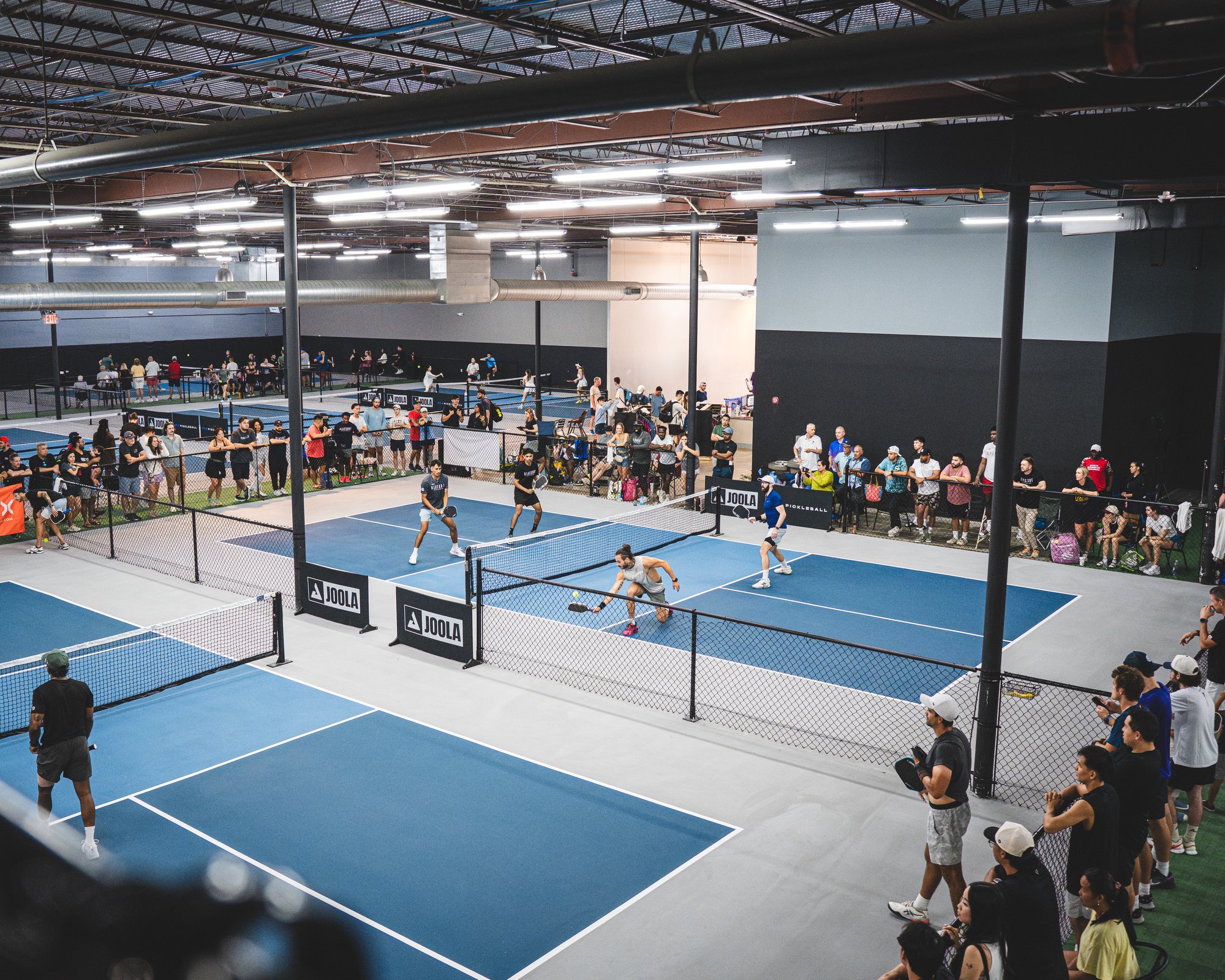
Success in this setting should be defined by personal progress rather than external markers alone. A player might measure success by a new level of confidence in serving, a reduction in unforced errors, or a more reliable transition to the net. For those who aim to compete, success looks like more consistent performance across a range of opponents and a sharpened ability to analyze and adapt during a match. The center supports this broader view of success by providing tools that help you track your development, such as simple performance metrics during drills, video review sessions, and regular feedback from coaches.
If you walk away with one impression, let it be this: Era Pickleball Center is built around reliable, practical ways to get better without turning the journey into a grind. The environment seems designed to minimize excuses and maximize accountability. It is not about overnight transformation; it is about steady, applied improvement that compounds over months and years. In a sport where minor adjustments can yield outsized gains, having a reachable, well-supported path matters more than flashy promises.
A closing sense of place
Walking the halls of the Era Pickleball center, you sense the interplay of care and ambition. It is a place where people who love the game come to learn, to practice, and to compete with integrity. The architecture is clean, the spacing thoughtful, and the equipment well maintained. The coaching philosophy is direct and humane, focusing on what actually moves performance forward rather than on abstract theories or faddish drills. And the community that forms around the practice sessions and events feels authentic, like a club that has matured into a resource for players at every level.
For players who value a clear, supportive path to improvement, erapickleball.com pickleball academy presents a compelling proposition. The center offers more than just space to play; it offers an ecosystem that encourages growth, accountability, and a pragmatic sense of what it takes to get better. It is a place where you can show up with a plan and leave with momentum. It is a place that can become, if you allow it, a consistent anchor in your pickleball life.
If you are curious about the specific programs, scheduling, or pricing, the most practical move is to reach out directly. The center’s staff is used to guiding players through the options in a calm, no-nonsense way. They click here can outline a beginner’s pathway, suggest a plan for mid-level players seeking to tighten their game, or help a tournament hopeful map out a sequence of clinics, practice blocks, and match play opportunities. The experience is better when you walk through it with a plan, and Era Pickleball makes that plan feel natural.
The journey from curiosity to competence is rarely linear, but the Era Pickleball center provides a reliable compass. It is a place where practice is purposeful, where play is meaningful, and where presence matters more than show. If you want a steady, structured environment to learn the craft of pickleball while staying connected to a supportive community, the academy Era Pickleball offers a compelling home base. The path may include court rentals, clinics, one on one coaching, and then a progression into more challenging formats, but the pace remains sustainable and the gains real.
In the end, the question is not whether you should join, but how soon you can begin building the routines that will carry you forward. The eras of your game are waiting to turn a few hours of practice into a story of improvement you can tell at the next tournament, on the next court, or during the next friendly match. The pickleball center Era Pickleball is ready to be part of that story, as a partner, a teacher, and a community that believes in the power of steady, informed effort.